

Home Feed
Home
Search
Search
Add Review, Blurb, Quote
Add
Activity
Activity
Profile
Profile
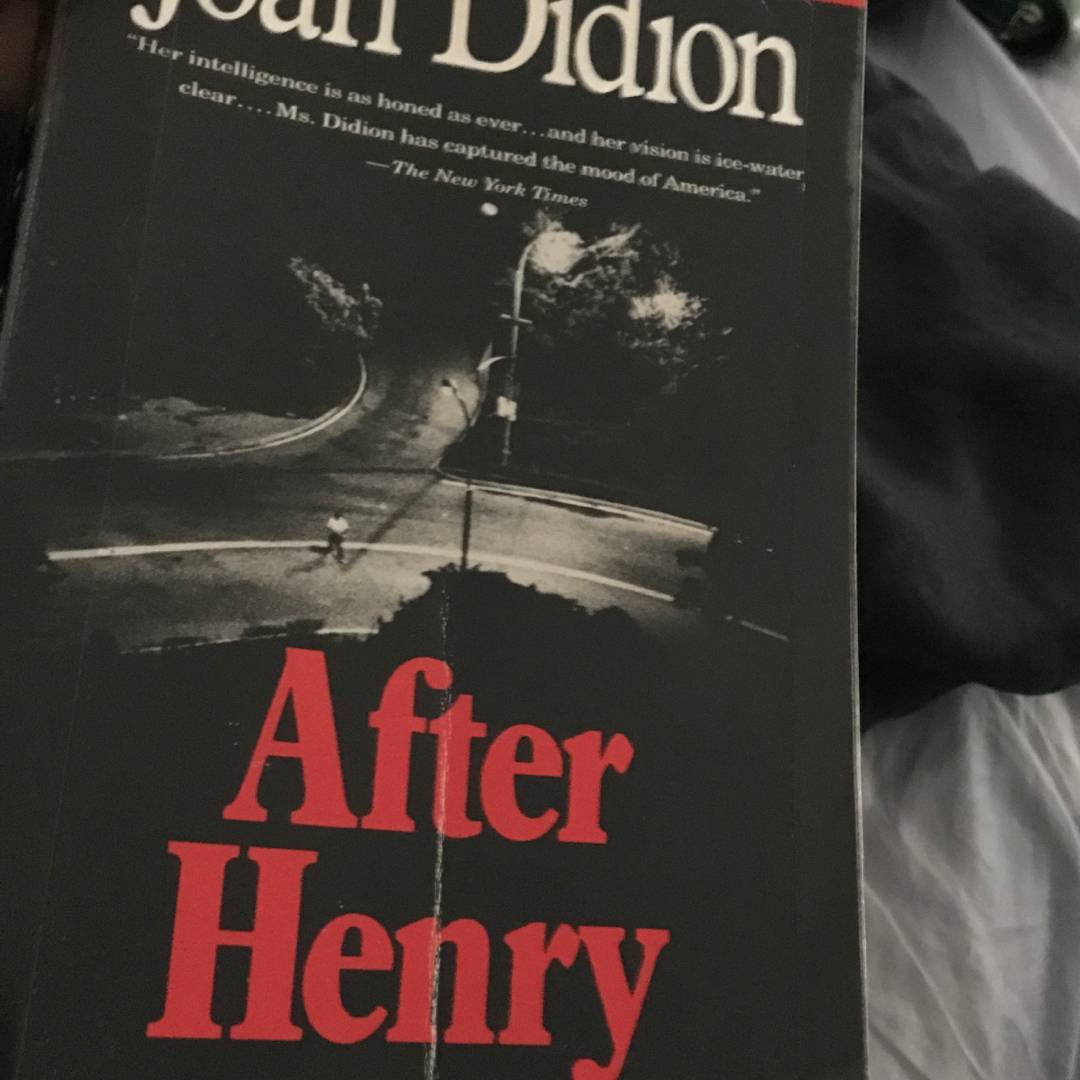
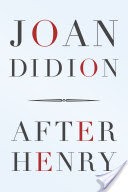
After Henry
After Henry | Joan Didion
3 posts | 2 read | 6 to read
 Displaying the same uncanny gifts for observation, portraiture, and understanding that marked her two prior celebrated essay collections—Slouching Towards Bethlehem and The White Album—Joan Didion takes us inside the overlapping worlds of American politics and media during the 1980s, her focus the defining narratives and image-making during the Reagan presidency and 1988 presidential race. Elsewhere, Didion, a Berkeley alumnus, chronicles return visits to campus in the 70s and 80s, weaving together memories of her undergraduate years and “Atomic Age” childhood, interviewing nuclear scientists at Lawrence Livermore Laboratory, and reflecting brilliantly on kidnapped California heiress Patty Hearst, a student at Berkeley when apprehended by radical leftists. “Fire season” in Southern California. The Cotton Club murder trial, a real-life L.A. noir with roles played by a top movie producer, a porn tycoon, and Columbian drug-cartel contacts. In “Times Mirror Square,” she tracks the stories and agendas of the men who built the Los Angeles Times, a prime shaper of Los Angeles for a century-plus. In the searing New York-set closing essay “Sentimental Journeys,” she lays bare the racial and class biases, the political and media strategies framing the narratives surrounding the Central Park jogger case. Download this first-ever digital edition of After Henry (named for her longtime editor Henry Robbins) and see why The New York Times, reviewing the book in 1992, declared, “Didion has captured the mood of America.”
Amazon Indiebound Barnes and Noble WorldCat Goodreads LibraryThing
Pick icon
100%
quote
willaful
After Henry | Joan Didion

... there has developed among those who do it [presidential campaign reporting] so arresting an enthusiasm for overlooking the contradictions inherent in reporting that which occurs only in order to be reported. They are willing, in exchange for “access“, to transmit the images their sources wish transmitted. They are even willing... to present these images not as a story the campaign wants told, but as fact.

willaful I'm finding the political sections of this book often hard to parse, but parts of it do stand out. 2w
Faranae I think Joan Didion was a self-involved hack 99% of the time, and this paragraph is overwritten, but for once she wasn't wrong. Access journalism has been a serious issue for decades, and not just in US election campaigns, though I think that's probably the single most harmful area. 2w
willaful @Faranae *All* of her paragraphs are overwritten! But there are gems in there. 2w
30 likes1 stack add3 comments
quote
willaful
After Henry | Joan Didion

“You can't imagine how it is when everyone you know is gone,“ someone I knew who was old would say to me, and I would nod, uncomprehending, yes I can, I can imagine, would even think, God forgive me, that there must be a certain peace in outliving all debts and claims, in being known to no one, floating free. I believed that days would be too full forever, too crowded with friends there was no time to see.

willaful Knowing she outlived both her husband and child makes this hit even harder. 2w
29 likes1 comment
blurb
Mrshawaii
After Henry | Joan Didion
post image

First post in a while.