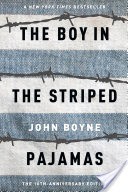
“We‘re not supposed to be friends, you and me. We‘re meant to be enemies.”

“We‘re not supposed to be friends, you and me. We‘re meant to be enemies.”
 pick
pickThis book is a historical fiction book, and it meets the expectations of historical fiction by the setting of the story. The book is set during WWII and is focused on a young Jew who is at a concentration camp and a young boy whose father is a Nazi. It draws out deep emotion for the reader, as they reader experiences these hardships with the boys.
I think this book would be most appropriately used in an upper level classroom because of the intensity of the situation. I would use this book as a way for students to gain an insight into the reality of the holocaust. I would have my students do a project on this book either a paper, presentation, or physical project board on the way the book has changed their views of the holocaust.
...“she'd leave behind slavery along with her name and pick a new one Harriet.“
I would use this book in my class if there was a topic about the civil war, slavery, or women's rights. I think this book could also be used as one to encourage students to stand up for what they believe, and inspire students through the work she did.
pickI think the subject's life offers interest and important information for children. The book is written about Harriet Tubman and gives key information about different roles she had throughout her life. It mentions that although she is remember for her work in the Underground Railroad, she was apart of a lot more in her life.
“The wrinkles in an elephant's skin help keep it cool. While it may look thick and tough, elephant skin is actually very sensitive- especially to insect bites.“
pickI think this book is engaging for students and I like the photos included in the book. I think it would be good for older elementary grades, but could be used for young elementary. I think the book is clearly written and engaging for students. It is very descriptive and includes language that would be good for students to learn.
I would use this award winning book to incorporate culture and science into literacy time. The book includes real photographs of elephants in the wild and true information. I would read part of this book to my students and then have them choose one or two facts that stuck out to them and write or draw as an activity.
“Long ago, in Old Japan, there lived a funny little woman who liked to laugh, 'tee-he-he,' and who liked to make dumplings out of rice.“
I would use this book to introduce students to world folktales and Japanese culture. It provides opportunities for comparing folktales across cultures, discussing story elements like repetition and clever protagonists, and exploring themes of resilience and humor. Students could also retell the story, act it out, or create their own folktales to connect with the oral tradition.
pickThe Funny Little Woman highlights its folktale roots through both story and style. The tale centers on an ordinary woman whose dumpling leads her into an encounter with mischievous on, blending humor, danger, and cultural tradition. Like many folktales, it features supernatural beings, repetition of events, and a clever protagonist who triumphs through wit and determination.
I would use this book similar to the way I used “Lon Po Po“ in a series of fairytales retold. We could read a couple of the books, and compare and contrast the differences in the different retellings of the story. I would then allow students to create their own version of the book as an activity following the lesson.
pickThis version of Rumpelstitskin is considered to be a fairy tale, in contrast of the original story that is a folk tale. It includes magical elements, moral lessons, and a timeless setting (“one upon a time“).
“Then they climbed down, went into the house, closed the door, locked the door with the latch and fell peacefully asleep.“
I would use this book in a series of fairy tales featuring the “Little Red Riding Hood“ book. It would be good for students to read different versions of traditional literature that features a new perspective.
pickThis book is considered to be a fairytale. Unlike the European version, this story features three sisters who outwit a wolf disguised as their grandmother. It emphasizes themes of cleverness, caution, and survival, making it both a cautionary tale and a celebration of wit and resourcefulness. It also starts in past tense starting the story with “Once, long ago...“
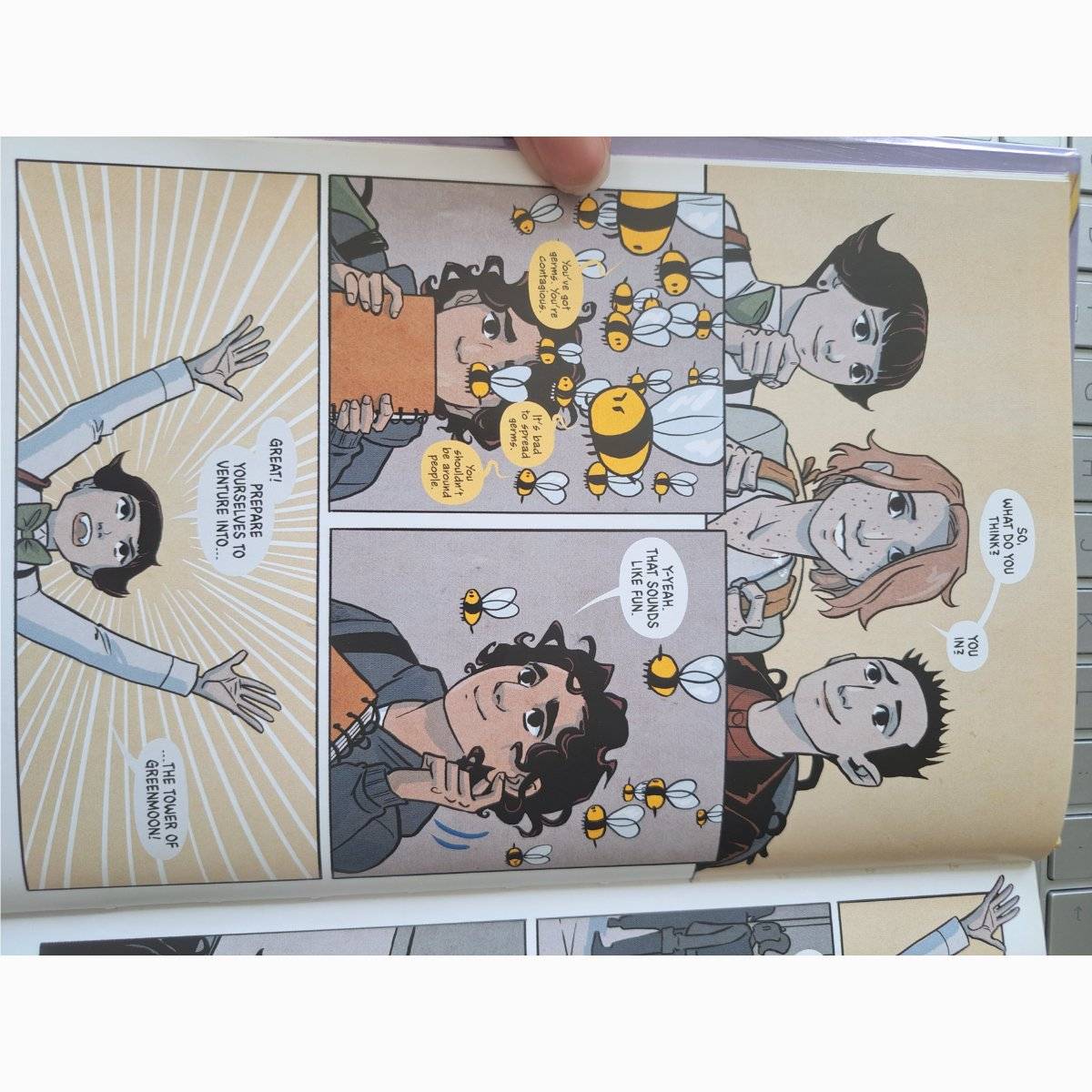
I would use this book as an option for quiet reading time. This book addresses mental health, specifically OCD and the ways it has effected the main character's life socially and academically. I think it could be a good way to tear down the difficulty of talking about mental health.
 so-so
so-soSamuel Sattin‘s Buzzing tackles mature themes like mental health and identity with honesty and care. Through layered storytelling, it highlights both the struggles and resilience of navigating difference, inviting readers to reflect with empathy on complex, often stigmatized issues.
“But the sea was full of wonderful creatures, and as he swam from marvel to marvel Swimmy was happy again.“
I would use this book to inspire students to create art with water color, and teach them about the ways a paint brush can be used to create shapes and feelings. I would talk about the intentionality it takes to use water color paintings.
pickThe illustrator uses shapes and lines to create different animals in the ocean. She uses the organization of shapes to create great sea of fish, creating a realistic, yet painting vibe. The colors add a calming feature to the book.
I would use this book to point out the pictures and talk to students about how the color effects the book. I would ask them if there is a special animal or toy that they love and how they when/if they had misplaced it. I would ask them how the illustrations tell us that something is wrong, which could lead into a conversation about body language.
pickThe illustrations in “Knuffle Bunny“ creates a real-life feeling by using real pictures from the city they live in, in black and white; while having the characters in color cartoon form creates a fun atmosphere.
“Something in the corner of his eye made him jump.“
This book received a Caldecott honor for the illustrations in the book. I would use this book around Halloween time, for a fun story time. I would use this book to inspire kids to write their own “creepy“ book as a post reading activity.
pickThe illustrations in this book allow for an eerie feeling, yet the organization of the illustrations creates a humorous element to the book. A lot of the illustrations are black and white, so it allows the orange carrots to pop out of the pages.
This Caldecott award winning book captures the feelings of a little girl going to her first week of school in the USA. This book highlights the challenges she faces with the language barrier, and how the food in her lunch box has reminded her of the comfort of home. I would use this book to talk about the emotions we may feel in a new place, and create conversations about how we can help each other feel more comfortable in our new classroom.
pickThis picture book is a Caldecott Honor featuring a little girl immigrating to the USA from Hon Kong. The illustrator uses color to captivate the emotion of the book, you can see how the vibrancy of the book is greater at the end when Jun begins to enjoy her time at school with new friends. The illustrator uses shapes to captivate the love and comfort Jun feels from the food in her lunchbox when everything else around her feel unfamiliar.
“We stand with our songs and our drums. We are still here. We are water protectors.“
This is a Caldecott Award winning book published in 2020. This book would be good to used to teach students about the protection of our planet and the different ways people honor and appreciate our earth.
pickThis is a strong, yet sweet book about a young girl of the Ojibwe tribe who is fighting against the oil pipeline for the protection of people's water supply. I liked this book because it talks about the values of the Ojibwe tribe in simple ways.
Owl Moon is a Caldecott Award winning book published in 1987 poetically written to create imagery for the reader. While the words say enough, the illustrations compliment the author's writing. I would use this book mainly in a third to fifth grade classroom on a snowy day, and allow it to inspire students to write poetry about their experience in the snow.
pickThis book creates a beautiful sense of imagery by simply the words in the book, and the illustrations align to create a sense of calm. This book reads about a little girl and her father as they go on an snowy adventure to find an owl.
This Caldecott Award winning book was published in 2015 used colors and art to captivate emotion behind the author's writing. This book could be used to broaden students perspectives about the different ways people live their everyday lives and encourage students to find beauty in unique places.
“He wondered how his nana always found beautiful where he never even thought to look.“
pickThis book features a story about a little boy and his grandma traveling to a soup kitchen. On this adventure after church they meet many new friends and get to find beauty in unique places.