“In the ocean‘s deepest, darkest depths, where the water is icy cold and the light is dim, giant squid glide silently through the black.”
In a classroom, I could use the book in science to introduce ocean habitats, food chains, or animal adaptations. In addition, I could use the book during literacy and have students focus on the author‘s descriptive language. Students could find examples of vivid sensory details and discuss how those words make the story powerful. For writing, students could write a paragraph describing another mysterious animal using language like Fleming does.
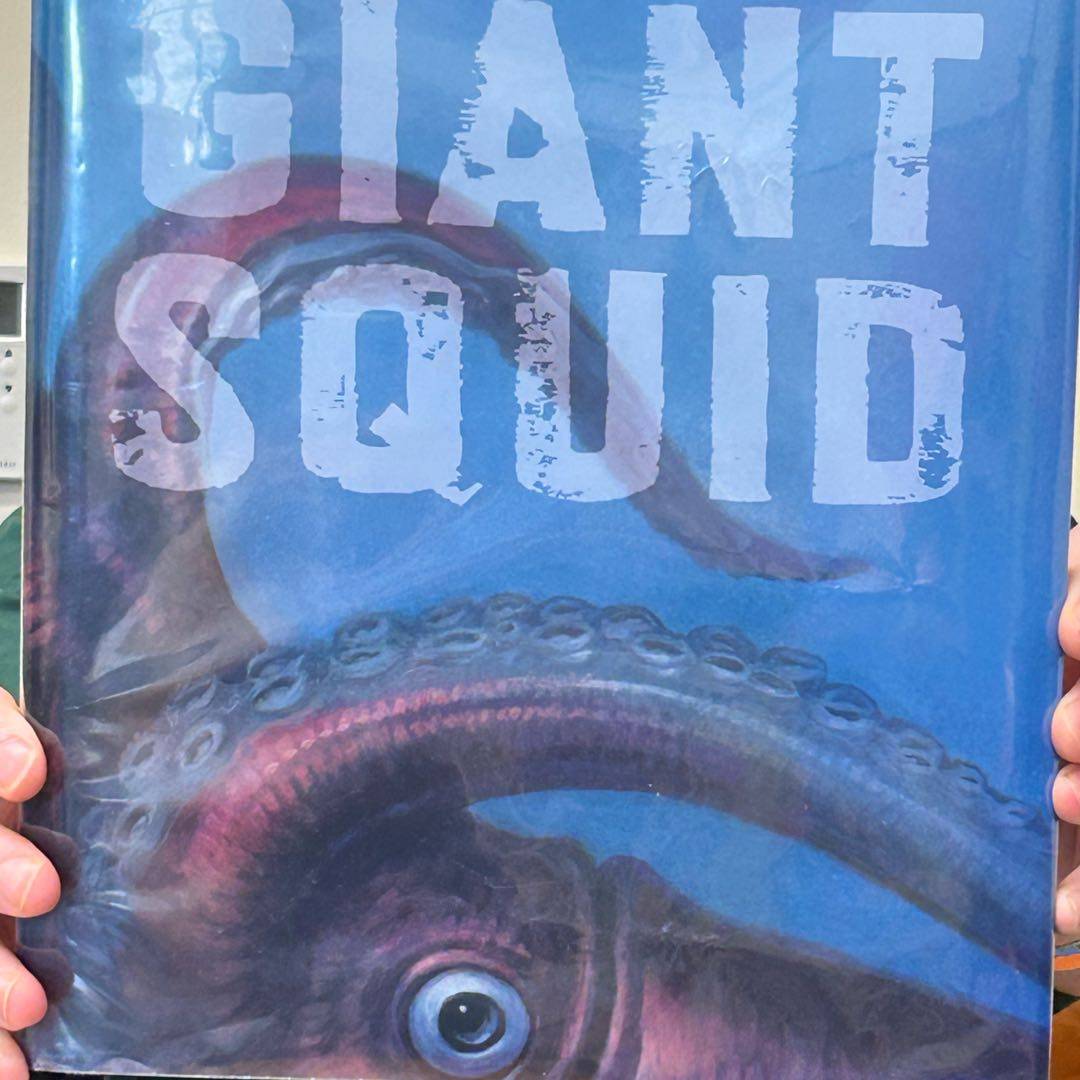
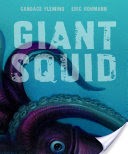
Giant Squid by Candace Fleming is a nonfiction book published in 2016. The style is very engaging. The author uses short, suspenseful sentences and poetic language that draw the reader in and build curiosity about this mysterious sea creature. In addition, Fleming uses descriptive, sensory language that helps readers visualize the dark ocean world and imagine the giant squid‘s movements.
Giant Squid by Candace Fleming (2016) is a mysterious nonfiction picturebook that includes detailed images of sea creatures. The animal of focus within this text is known as the giant squid. The giant squid Is described as having a ginormous body with very long tentacles. The tentacles are dangerous and the squid is described as a predator, anxiously waiting to capture other sea animals as prey.
The deep and dark images used throughout this book really pull you into the story. You feel as though you are underwater surrounded by mysterious sea creatures. The enlarged pages add even more of a gripping effect when reading. Great book for kids of all ages!
“Sucking water into its body, and squirting it out - the creature jets away.“
“The giant squid lives in the deep, dark ocean. It is so mysterious that many people have never seen one.“
What a great book! After reading the book, have students create their own underwater scene with a giant squid. They can use the illustrations from the book as inspiration and learn about other ocean creatures. This encourages creativity and reinforces knowledge about marine life.
“The Giant Squid“ by Mary M. Cerullo is an engaging and educational children's book that introduces readers to the mysterious and fascinating world of one of the ocean's most elusive creatures. Through vivid illustrations and clear, accessible text, the book takes readers on a journey into the deep sea, offering a glimpse into the life of the giant squid.
Giant Squid is a really cool integration of a scientific discovery within a kids book. The book has incredible color that makes you feel as if you are in the depths of the sea. I'd have this book in my classroom.
Proof of a giant squid was finally found! this book goes into detail of the story of just how a giant squid was discovered and finally filmed in its natural habitat. The large visual images and powerful colors in this book convoy the excitement of this animal's discovery!
Great book to incorporate animals and vocabulary into other subjects. Rich color and amazing pictures.
Non-fiction, 2016. An injured whale's ring-shaped scars indicate an encounter with a giant squid. A piece of beak broken off in the whale's belly; a flash of ink dispersed as a blinding defense to allow the squid to escape-- these fragments of proof were all we had . . . until a giant squid was finally filmed in its natural habitat only two years ago.
“With writhing arms and ghostly, lidless eyes they glide; some large as buses, some weighing a ton. So big, yet rarely seen.“
This would be a great book to read to students to get them engaged in a lesson that talks about deep-sea animals. This book is about the mysterious giant squid and how it lives deep deep deep in the sea. It is a Robert F. Sibert Honor Book. It discusses the challenges that come with living in the deep sea and how the squid defends itself and its babies.
This is a nonfiction book that explores the mysterious animal in the deep sea, the Giant Squid. It uncovers the different body parts of the squid and why they are important to the squid. For example, it explains the eye being as big as a soccer ball. Then the story tells how when another dangerous animal comes up, the squid squirts its ink to defend itself.
“With writhing arms and ghostly, lidless eyes they glide; some large as buses, some weighing a ton. So big, yet rarely seen.“
This would be a great book to read to students to get them engaged in a lesson that talks about deep-sea animals. It is a Robert F. Sibert Honor Book. It discusses the challenges that come with living in the deep sea and how the squid defends itself and its babies. This book is intended for children ages nine to ten years old which after reviewing the book, I agree with. But I feel as if it is also suitable for older students as well.
“The tentacles seize their prey.
They surround their thrashing meal.
They latch on with powerful sucker-studded clubs.“
“With writhing arms and ghostly, lidless eyes they glide; some large as buses, some weighing a ton. So big, yet rarely seen.“
This would be a great book to read to students to get them engaged in a lesson that talks about deep-sea animals. This book is about the mysterious giant squid and how it lives deep in the sea. Overall, the book discusses the challenges that come with living in the deep sea and how the squid survives.
This book would be great in any age classroom. The book focuses on one of the most mysterious deep sea creatures in the ocean. It has a great introduction that grabs the attention of the reader and then continues to explain what we know about this creature in an interesting and eye catching manner. The illustrations are great so students can be able to visualize the enormous size of this creature.
This children's nonfiction picture book explores the true story of the hunt for the mysterious Giant Squid. This story explores and provides readers with various facts about the squid. For example, it explains how their eyes can be as big as a soccer balls. It also shares that when another dangerous animal comes up, the squid squirts its ink to defend itself. The illustrations in the book are also portrayed in a very realistic manner.
Giant Squid is a nonfiction book that explores the mysterious animal in the deep sea. It uncovers the different body parts of the giant squid and why they are important to the squid. The book explains how the squid defends itself and the challenges of living in the deep dark sea.
This nonfiction text provides a great story telling feeling around the life of the giant squid. Accompanied with the illustrations, the reader is able to learn about how they catch prey, eat, use their tentacles, and begin their life. Readers are able to see how they begin as small organisms and grow into their full size and protect their offspring by using their ink. Great book with great illustrations.
“Here we have an animal that is truly the stuff of legends. It's like a sea monster in the middle of the 20th century.“
“Giant Squid“ is a picture book that explores the deep-sea world of the giant squid, a mysterious creature. The book takes you on a journey to learn about its fascinating features and the ongoing scientific quest to understand it. With beautiful pictures and engaging text, it captures the sense of wonder and mystery surrounding this sea creature. I would love to use this in the classroom.
“With writhing arms and ghostly, lidless eyes they glide; some large as buses, some weighing a ton. So big, yet rarely seen.“
In the murk…an eye! Round. Unblinking. Some as big as soccer balls. The biggest eyes on the planet.
This book would serve as a great nonfiction read aloud for elementary students across all grades. The true nature of the story incorporates science into the read aloud and makes it suitable for any grade.
Giant Squid by Candace Fleming tells the true story of a scientists journey to find the titular Giant Squid. Fleming tells this story through the use of poetic language and eye grabbing, detailed illustrations. The book breaks down the Giants Squids features, as well as how and what it eats. This fascinating creature is brought to life through colorful descriptions and the illustrations.
This would be a great book to read to students to get them engaged in a lesson that talks about deep-sea animals. This book is about the mysterious giant squid and how it lives deep deep deep in the sea. It is a Robert F. Sibert Honor Book. It discusses the challenges that come with living in the deep sea and how the squid defends itself and its babies.
This a nonfiction book that explores the mysterious animal in the deep sea, the Giant Squid. It uncovers the different body parts of the squid and why they are important to the squid. For example, it explains the eye being as big as a soccer ball. Then the story tells how when another dangerous animal comes up, the squid squirts its ink to defend itself.
I belive this book would capture the attention of young readers, the way in which the illustrations are done builds suspense, it is a little bit scary so I would say maybe upper elementary would be appropriate
Children are going to fascinated by this story, talking about this large sea creature and understanding its vast potential, the pictures build suspense
Giant squid was a really cool nonfiction book. I loved how it was told poetically and exciting but it was still factual. When I think of nonfiction books I think of boring colorless pages but this book was so fun to read. I also liked how it had the fact pages at the end to reference. The only thing I wish they did was add the actual photographed picture of the giant squid as well as the beautiful illustrations.
Giant Squid is a nonfiction picture book about exactly what the title says, a giant squid. Their information is discovered by scientists looking at the clues they leave behind. It is written by Candace Fleming and illustrated by Eric Rohmann. This book was published in 2016 and has won many awards including the Robert F. Sibert Informational Book Award, Charlotte Zolotow Honor Book, Cybil's Award for Elementary Non-Fiction, and...