


“He was born on an island far away where imaginary friends were created.”



“He was born on an island far away where imaginary friends were created.”
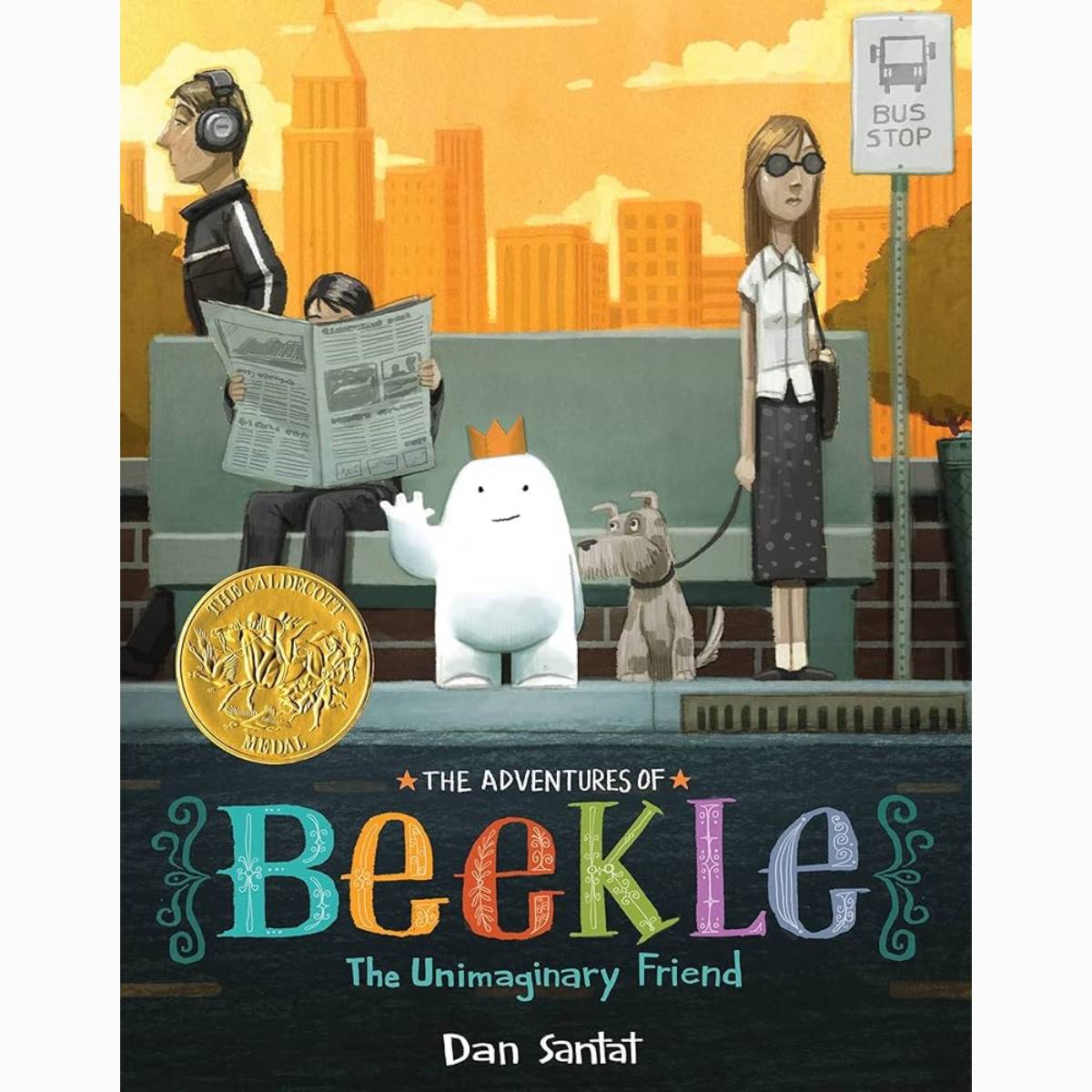
This story follows Beekle, an imaginary friend who sets out to find the child who will imagine him. In the classroom, the book is useful for exploring themes of friendship, courage, and belonging. It can spark discussions about imagination and creativity, while also encouraging students to write or draw about their own imaginary friends or the friends they‘d like to have.
 pick
pickIn The Adventures of Beekle, the art is carefully organized through bold colors, shifting perspectives, and imaginative shapes. The contrast between the gray, muted tones of the “real world” and the vibrant, whimsical world of imaginary friends highlights Beekle‘s journey. The illustrations deepen the meaning by showing his loneliness, bravery, and eventual joy in finding friendship.
“He was born on an island far away where imaginary friends were created. But Beekle was different… he was born a little too strange.”
I would use this book in grades PreK–2, this book works well for lessons on friendship, courage, and imagination. I would use it to start discussions about making new friends, or have students design their own imaginary friend as a creative writing/art activity. I would talk about how we are all friends in the classroom.
pickThis book is a picturebook. It was published in 2014. The lines in this book are Smooth, rounded lines make Beekle appear soft, approachable, and lovable. Bright, fantastical colors on the island contrast with muted grays and blues in the city. When Beekle finds friendship, the palette shifts to brighter tones, symbolizing hope and joy.
“And together they did the unimaginable.“
This story could inspire classroom discussions about empathy and feelings. The class could discuss how Beekle feels when his is unsure or lonely and relate it back to their personal experiences.
 so-so
so-soThe Adventures of Beekle: The Unimaginary Friend by Dan Santat is a picture book published in 2014 and is a Caldecott Award winner. The illustrator uses color to create contrast between Beekle's world, which is muted and gray, and the real world, which is vibrant and bright. The soft, round shapes he used for Beekle and the child make them appear friendly and approachable.

