


 Mr Tiger Goes Wild |

“ROAR!”

This book could be used to begin a discussion or activity on the students expressing themselves and finding their identity.

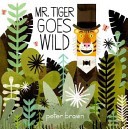


This book could be used to begin a discussion or activity on the students expressing themselves and finding their identity.
pickPicture Book, published in 2013
The illustrator uses fonts and text size to represent the loudness and feelings of the main character. The text exploding outside the borders of the text bubble resembles him venturing out of the metaphorical box he‘s been put in by other animals in his community.
I would use this book to talk about being your true, authentic self even if it isn't viewed as “typical“.
pickPicture book published in 2013
The illustrations in the story changed color based on the mood in which the tiger was feeling. When he was stuck in the city, the colors were gloomier and when he was in the wild they were all very bright, conveying the joyful feeling of the story.
I would use this in my classroom to start the day or just a fun craft or during a lesson about being yourself .
pickThis books pictures are structured then slowly bust out of the bubbles and change as it follows along with the story I personally loved and enjoyed the progression.
“Everyone was perfectly fine with the way things were. Everyone but Mr. Tiger“
I would use this to teach about individuality and expression to my class.
pickMr. Tiger Goes Wild by Peter Brown is a book about self-expression and individuality. The story follows Mr. Tiger, who feels trapped by the proper ways of his city. He decides to “go wild,“ finding a balance between being himself and fitting into his community. The style of the illustrations start very beige and proper, as the story moves forward the composition of the pictures becomes more colorful or wild. Along with this words become larger.
I think that this was a fun and silly book about Mr. Tiger finding who he is, when he is in a world that makes him conform against what he wants to do. He finds a happy medium between being comfortable in who he is as a tiger but also learning to balance the world around him.
pickMr. Tiger Goes Wild is a picture book that tells the story of Mr. Tiger and how they live in a proper world of suits and manners. One day he decided that he is over the prim and proper world and rids himself of the manners and clothes of the proper world. This is a silly story with great illustrations, and how when he runs to the forest, he feels at home in the wild.
The book would make a good lesson on being different and embracing each other‘s differences. It could also be a good lesson on sometimes feeling the need to be wild and what we should do when that happens.
In this book, Mr. Tiger embarks on a colorful journey of self-discovery, yearning to break free from the confines of his civilized animal community. Peter Brown‘s stunning illustrations burst with energy, capturing the spirit of individuality and the joy of living authentically. This delightful tale encourages readers to embrace their uniqueness and reminds us all that it's perfectly okay to be a little wild!
pickMr. Tiger Goes Wild by Peter Brown features vibrant illustrations that capture the whimsical journey of Mr. Tiger, reflecting the importance of individuality. The art, blending watercolor and digital techniques, enhances the story's themes of self-acceptance and freedom. The book emphasizes celebrating differences, making it a timeless addition to children's literature.
pickI loved the use of color through out this book that really allows the reader to see what Mr. Tiger is feeling. I also love the message and theme of being yourself and society will change for you not the other way around.
Picture Book
I thought it was very funny when mr tiger was “naked” after he swam in the fountain.
pickMr Tiger Goes Wild by Peter Brown, 2013, is a picture book full of lush green forest and a bright orange tiger. The color of the tiger represents that the main character feels different. The other characters and the illustrations are vertical and a diatonic room of the tiger being horizontal. The vocabulary, like proper and prim, are introduced naturally in storytelling. Speech bubbles are used to emphasize the characters words and feelings.
pickMr. Tiger Goes Wild By Peter Brown 2013.
Is a picture book full of lush green forest and a bright orange tiger. The color of the tiger results in the representation that the main character feels different. the other characters and the illustrations are vertical and a distinction of the tiger being horizontal. The vocabulary, like proper and prim, are introduced naturally in the storytelling. speech bubbles are used to emphases words and feelings.
I enjoyed the time era that this story was based on. It's a funny thing to see a town full of prim and proper wild animals and suits and top hats. I think children would enjoy seeing this alternate universe and find it hilarious and intriguing
I love how this book may make children feel better about their “wild side” coming out!
This book would be great for any ages. I especially think that this book would be great for students who may feel like they don't fit in, as they would be able to relate to the main character, Mr.Tiger. There are also lots of things to point out about the book features such as speech bubbles, characterization, and comparing and contrasting.
I would love to use this book alongside some other books about embracing change. Tiger figures out that even in a new space, he missed his family and friends and that his change left an impact on others in the community. I want to encourage students to do the same in their classroom!
pickMr Tiger Goes Wild by Peter Brown published in 2013 . There are lots of intentional pieces of this story like the colors, verticals, and rectangles that differ from Mr. Tiger's bright orange color and shows how he needs change in his life. He becomes bored with the restraints of his sophisticated life and his actions create a domino effect changing life for him and his friends. Speech bubbles are used to emphasize characters words and feelings.
This book had great dimension in it, my kids would love it! I loved how all the other characters were vertical where Mr. Tiger was horizontal! I also enjoyed the color placement. As you read the book it began with a grey scale of colors with the pop of Mr. Tiger then when he goes to the “wild“ it becomes a bright green! Loved it!!!
“ if you must act wild, kindly go to the wilderness. ... what a magnificent idea“
“Everyone was perfectly fine with the way things were. Everyone but Mr. Tiger.“
I enjoyed the simple yet intricate pictures that are in this story. Throughout the story, it shows many animals besides the tiger which is engaging and enriching for an interactive read-aloud. You could use this book when talking about classroom management and you could use this book to tell your class that it is okay to get wild, but it's about where you get wild and when you should get wild.
pickMr. tiger goes wild, by Peter Brown (2013) is a great fiction picture book with a theme of embracing change and testing the boundaries of what is considered normal. The layout has lots of different shapes, colors, vertical houses and tiger being vertical to show him going against the rest of the illustration. The illustrations do a great job of following the emotions of tiger as he discovers more about himself and his home.
pickMr. Tiger Goes Wild by Peter Brown, 2013. Picture book. This is a wonderful book for young children ages 3-8. This book tells a story about a character who strives to be different from the rest. It teaches a moral lesson about taking risks and the importance of family, friends, and being homesick. There are very strong facial expressions and body language in this story, depicting how the characters feel.
This is great for parents and educators who want to do compare and contrast lessons. The book is ver humors and allows for the teacher/parents to connect with the listeners.


